What the Hearth Owes
An apprentice restorer finds a shoe in a sealed chimney that fits her exactly and was laced the way only she laces hers.
Read by a full cast: your narrator tells the story, every character speaks in their own voice. About 7 minutes.
Narrators are synthetic voices designed for Flinchd or licensed from our speech provider, with invented names. None imitates a real person. Characters are cast automatically, so the person speaking is never the person narrating. A score matched to the genre plays underneath; turn it up or off in the player.
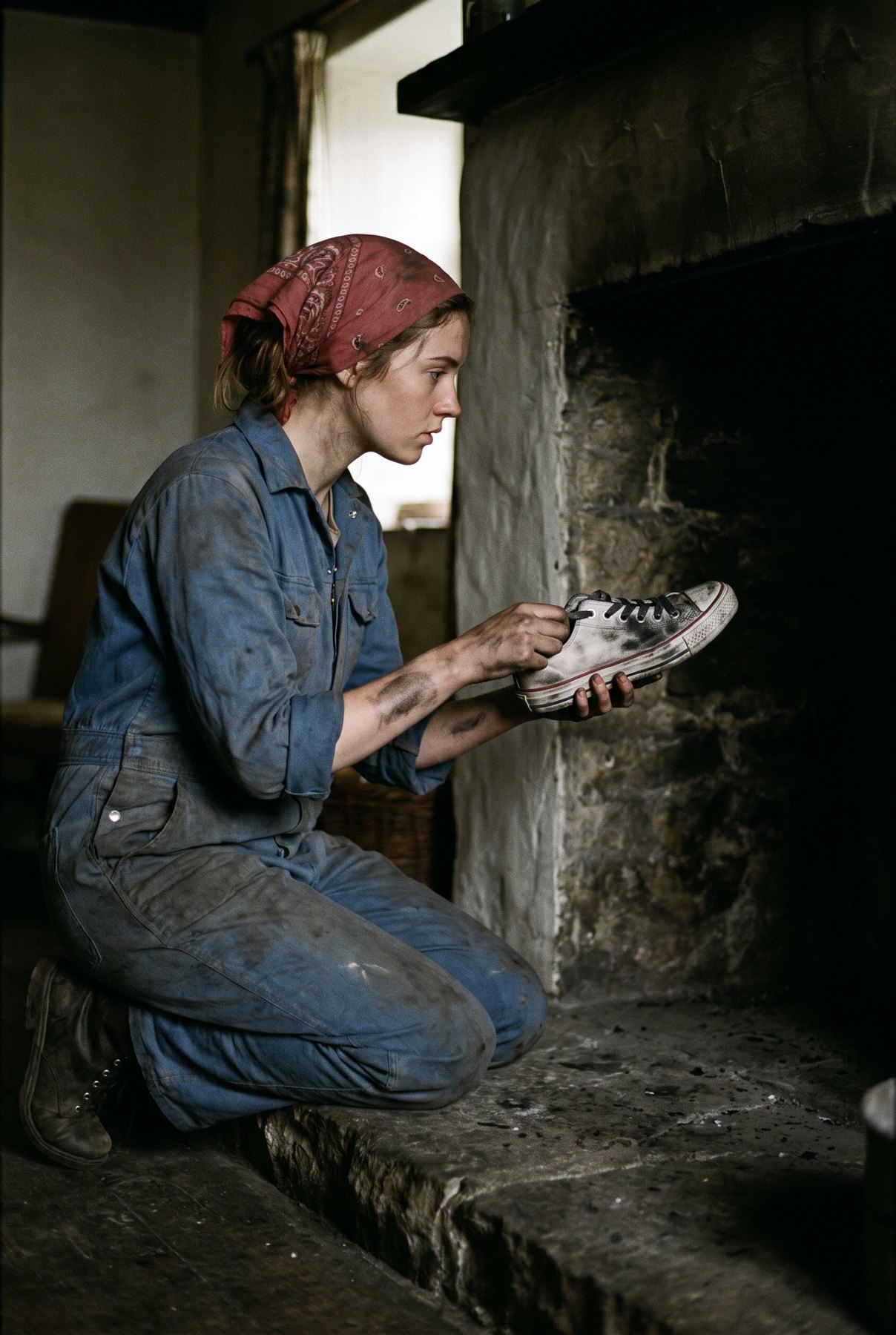
Bridie Colne had her arm in up to the shoulder before she felt the shoe, and by then it was too late to decide she didn't want to.
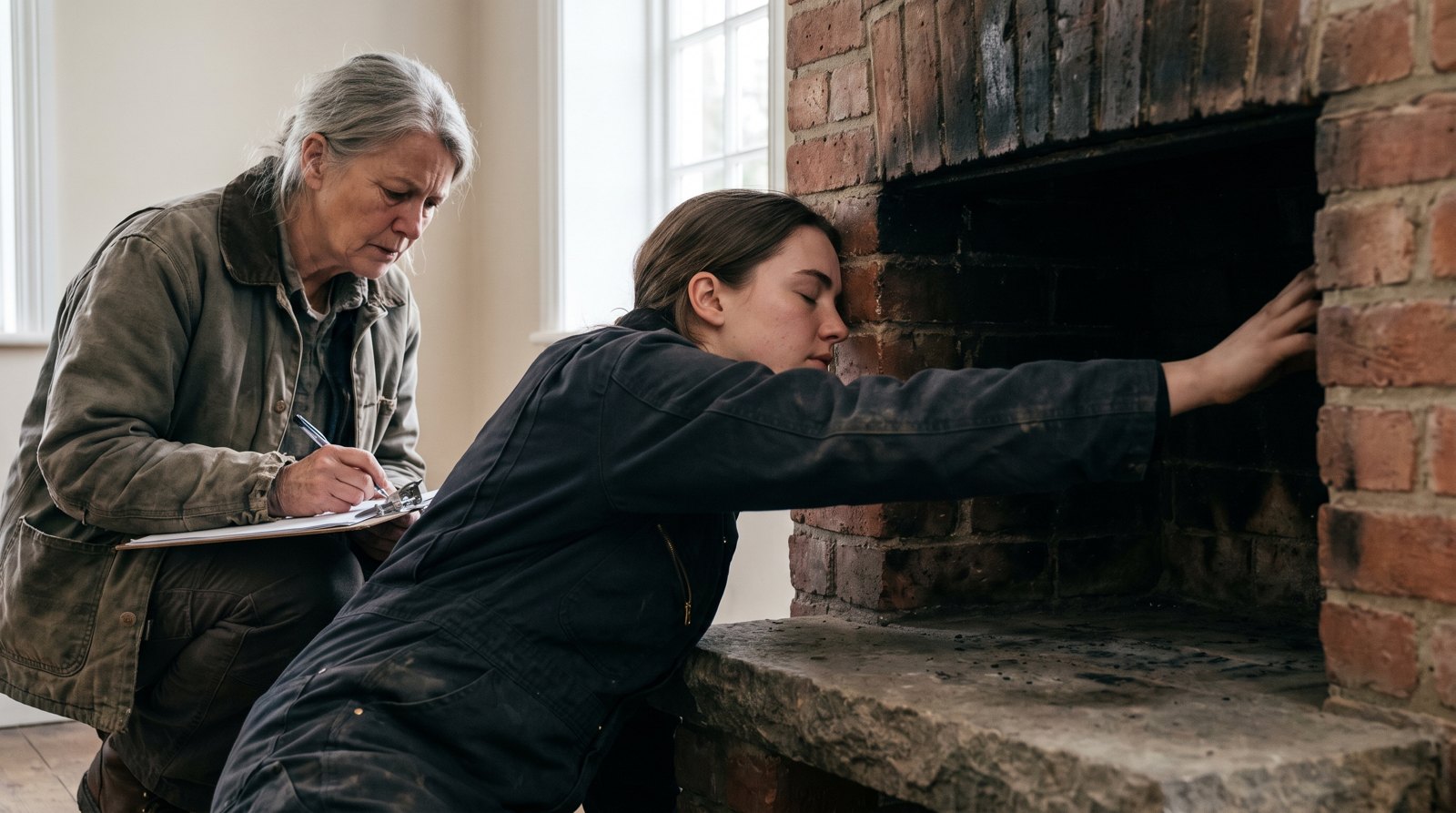
"Careful," said her aunt Cora from the hearthstone, not looking up from her clipboard. "Nine times out of ten it's a dead bird."
It wasn't a bird. Bridie's fingers closed on canvas and lace and the soft give of a sole gone damp with fifty years of soot, and she drew it out into the grey light of Mrs. Yarrow's front room.
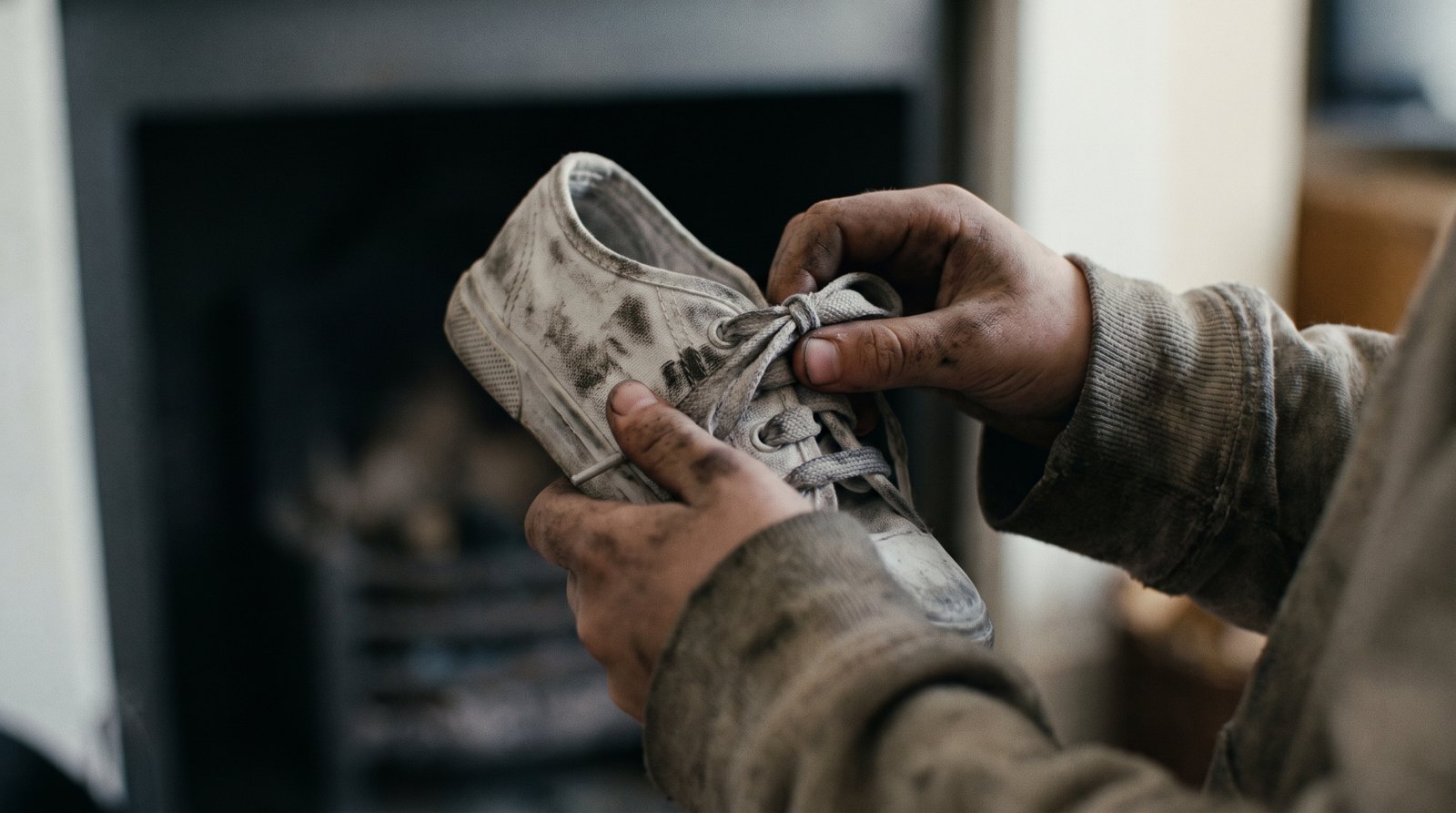
A trainer. White once, the sort sold in every shop in the county. Left foot. Size four.
Bridie's own size, exactly.
She turned it over. The tread was barely worn. Someone had double-knotted the lace the way she double-knotted hers, a loop and a loop and a tug through the middle instead of a bow, the way her father had shown her before he left.
"Aunt Cora." Her voice came out smaller than she meant it to. "This one isn't old."
Cora set the clipboard down on the hearthstone, careful as a woman lowering a full glass. Something moved behind her eyes that wasn't quite surprise.
"There's always a shoe in an old flue," she said, in the voice she used on clients, flat and reasonable. "Farm boots, baby's boots. People hid them for luck, going back three hundred years."
"There's a whole index of them up at the museum in town." She looked at the trainer and her jaw went tight.
"That's not luck," Cora said. "Fetch the tin from the van. The one under the seat."
"Why do we need a tin for a shoe?"
"Because I said," said Cora, and that was the end of it, until it wasn't.
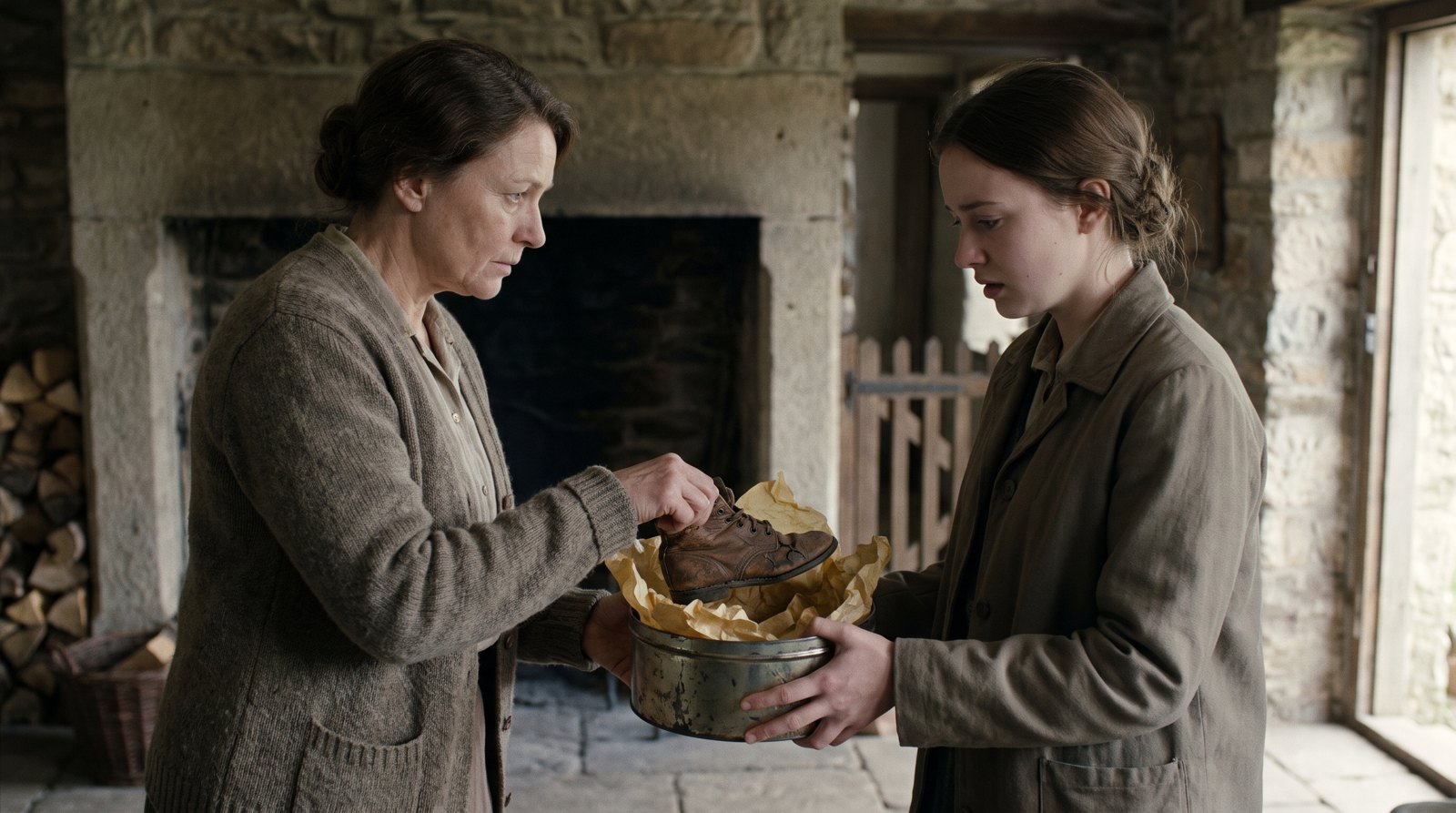
The tin held a second shoe. Old, cracked, a child's boot from some other job in some other decade, wrapped in tissue like something that might still bruise. Cora had never let Bridie touch it before. Now she pressed it into her hands like she was glad to be rid of it.
"You put one back before you close a hearth that's been shut fifty years or more," Cora said. "Doesn't have to be the same one. Has to fit whoever last had their bare hand in the flue." She paused. "That's you, love. Not me. I had my gloves on."
Bridie laughed, because it was funny, because it was the kind of rule you made up to keep an apprentice from cutting her hand on old brickwork. Then the flue ticked.
It was a small sound, dry as a knuckle cracking, and it came from nowhere Bridie could point to. Cora didn't laugh. Cora looked at the open black mouth of the chimney the way you look at a dog that has just stopped wagging its tail.
They were still arguing about the boot versus the trainer when someone knocked, and Mr. Rennick let himself in without waiting for an answer, the way old men do in houses they have known longer than the people living in them.
"Heard you'd opened her up," he said, meaning the chimney, not Mrs. Yarrow, who was at her sister's for the afternoon and would come home to whatever they left behind.
He was looking at the trainer in Bridie's hands, and he had gone the colour of the ash on the hearth.
"You'll want to put something back before dark," he said. "Whatever you found."
"You know about this," Bridie said. It wasn't a question, not really, but she wanted him to answer it like one.
"I found a boot in this exact chimney in nineteen sixty-one," Mr. Rennick said. "Small as a doll's. I was eleven, and I thought it was the best thing I'd ever seen, so I took it home instead of putting one back."
He held up his hands, weathered and perfectly ordinary.
"My kitchen has never once, in sixty-five years, gone above ten degrees. Boiler's new twice over. Doesn't matter."
"That's not a curse," Bridie said. "That's a draughty kitchen."
"Believe what helps you sleep," said Mr. Rennick, not unkindly, and let himself back out into the cold.
By four the light was going and so, Bridie noticed, was the room's warmth, faster than the season had any right to take it. She checked the radiator with her palm. Working. She checked the window. Shut. The flue ticked again, twice, close together, and this time Cora heard it too and did not pretend she hadn't.
"It counts something," Cora said quietly. "I don't know what — degrees, maybe. I've only seen it done twice before, and both times the woman doing the job put the old boot back and it stopped."
"So put the old boot back," Bridie said. "Problem solved."
Cora wouldn't meet her eyes. "The rule's about whoever's hand it was. Not whoever's convenient."
Bridie looked down at the trainer, at the double knot her own fingers could have tied, and understood, all at once and too late, what her aunt was not saying: the old boot was a decoy, a shoe that fit nobody, offered to a debt that had already decided exactly who it wanted. It had wanted her before she ever put her arm in the wall.
She said so, out loud, and Cora didn't argue.
The flue ticked nine more times before six, and each tick took a degree with it, until Bridie could see her own breath inside a house with the heating on full. Frost feathered up the inside of the front window, a window that faced south. Her left foot had gone numb somewhere around the fifth tick, though she had two socks on and had not gone near the door.
"We could just leave," Bridie said, teeth close to chattering. "Lock up. Let Mrs. Yarrow find whatever she finds."
"It isn't Mrs. Yarrow's hand that opened it," Cora said. "It'll follow the hand. It'll follow it home."
That decided it, in the end, more than any tick or any frost. Bridie thought of her own front door, her own hearth, cold and disused and perfectly ready to be the next mouth this thing found its way into if she let it walk out of Mrs. Yarrow's house behind her.
She pulled off her own left trainer, worn at the heel exactly the way the one in her hand was worn, laced with the same loop and loop and tug she'd been taught before her father left and never came back to teach her anything else. It was scuffed. It was hers. It fit.
"Not the old boot," she said, mostly to herself, and set her own shoe down in the black mouth of the flue, sole out, the way the other one had been facing when she found it. "A fair trade. Mine for mine."
The tenth tick did not come.
Warmth came back into the room the way water comes back into a bath, all at once and from everywhere, and Bridie's numb foot burned pins and needles so fierce she had to sit down on the hearthstone and laugh, shaking, while Cora bricked the opening closed around one white trainer, left foot, size four, and did not ask which one it had been.
They drove home past dark with the tin rattling empty on the back seat, the old decoy boot returned to its tissue, unused and unneeded, and Bridie's left foot cold in just a sock because she hadn't thought to bring a second pair.
"You did the right thing," Cora said, eyes on the road. "Not the easy thing. The right one."
"Will it come back?" Bridie asked. "Ever?"
"Not to that house," Cora said. "Not while there's a shoe in the wall that fits."
Bridie almost believed her, all the way home, all the way up to bed. It was only in the morning, reaching for her school bag, that she found the tin from the van sitting on her windowsill, though neither of them had carried it inside, and the tissue paper inside it unwrapped around a shoe she had never seen before.
It was smaller than any child's boot in her aunt's whole collection. Smaller than any foot she could imagine walking on.