The Silent Register
A trainee organ tuner finds a pipe too low to hear, wired to a pew that isn't hers yet. It will be, by evensong.
Read by a full cast: your narrator tells the story, every character speaks in their own voice. About 7 minutes.
Narrators are synthetic voices designed for Flinchd or licensed from our speech provider, with invented names. None imitates a real person. Characters are cast automatically, so the person speaking is never the person narrating. A score matched to the genre plays underneath; turn it up or off in the player.
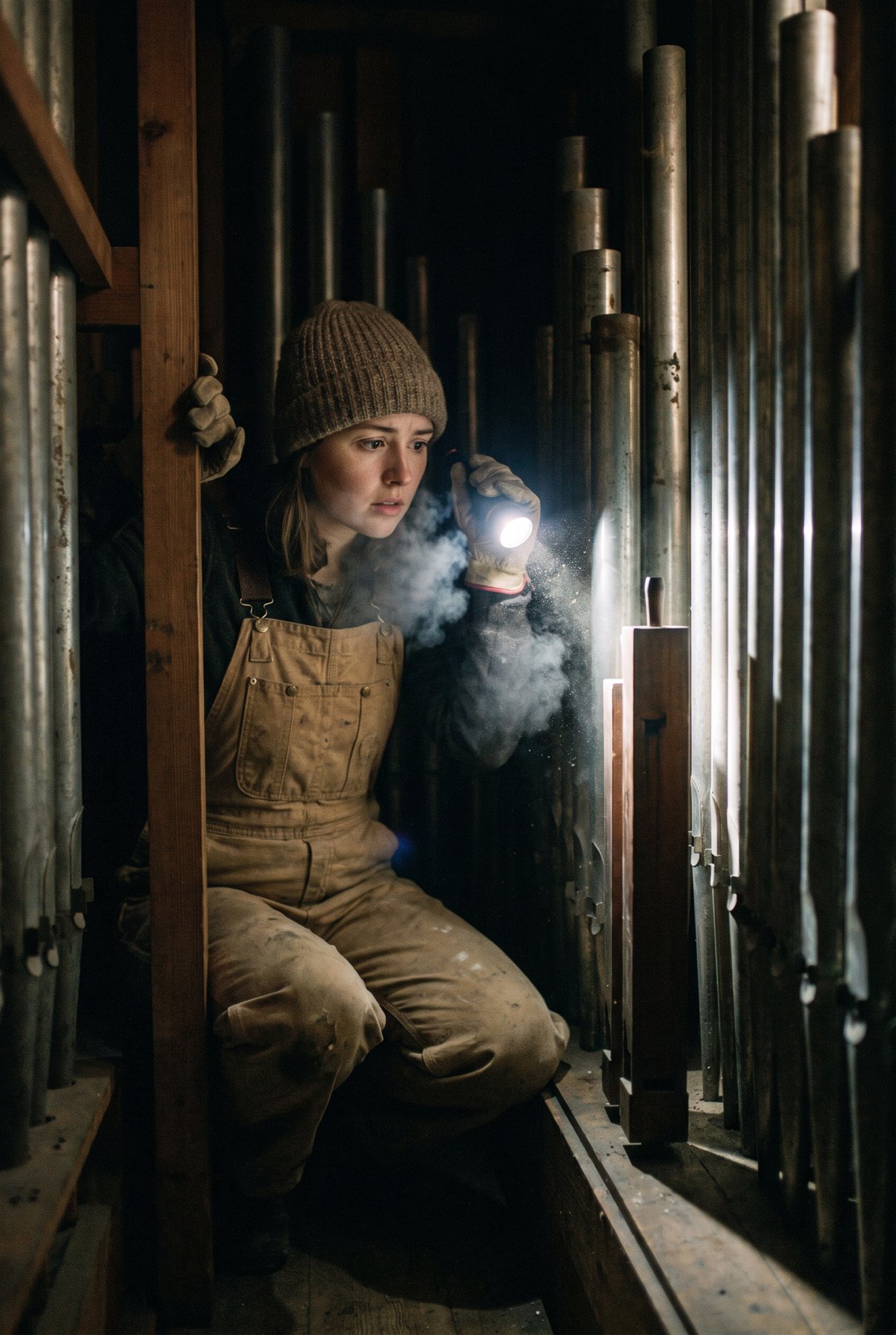
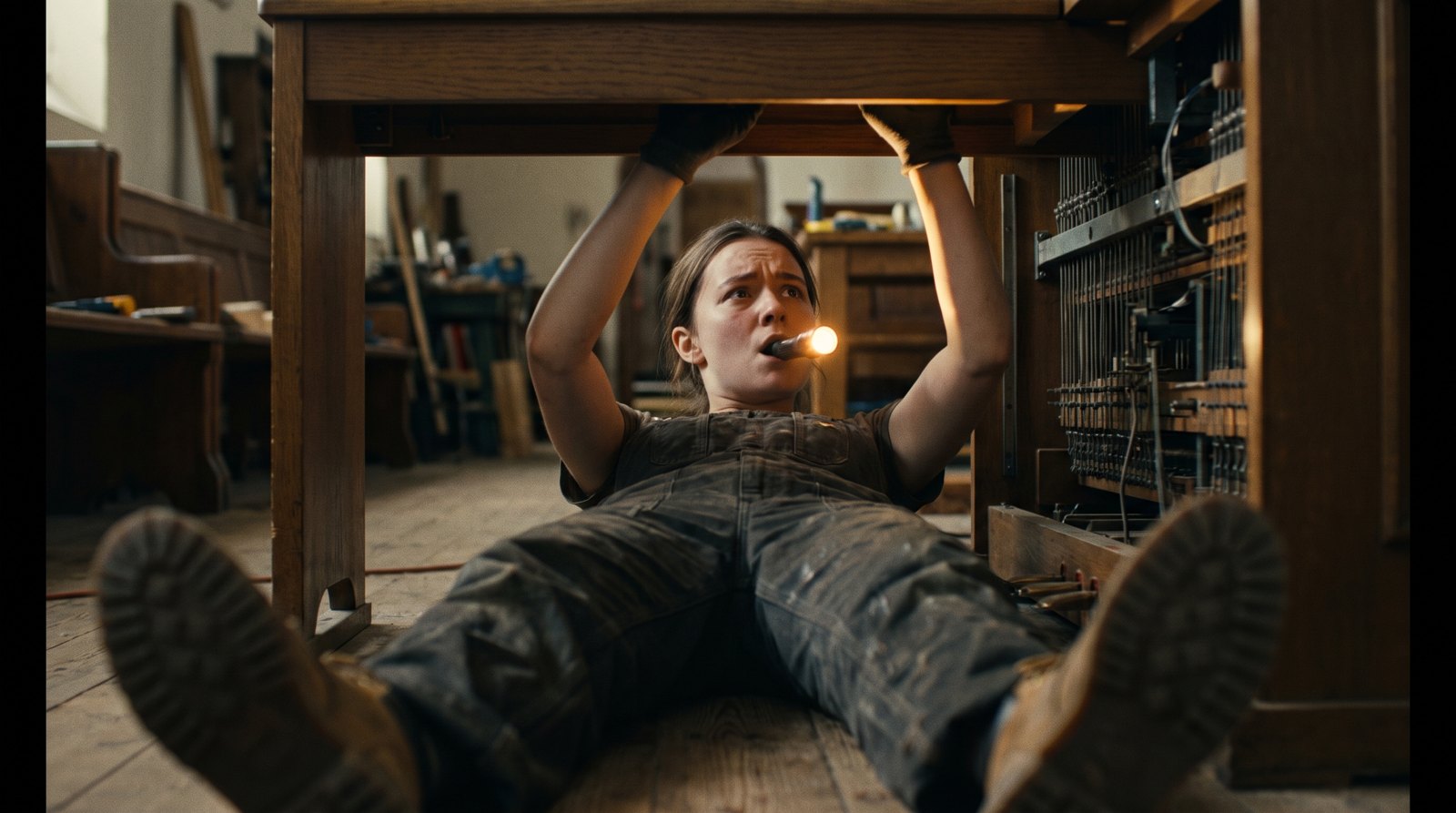
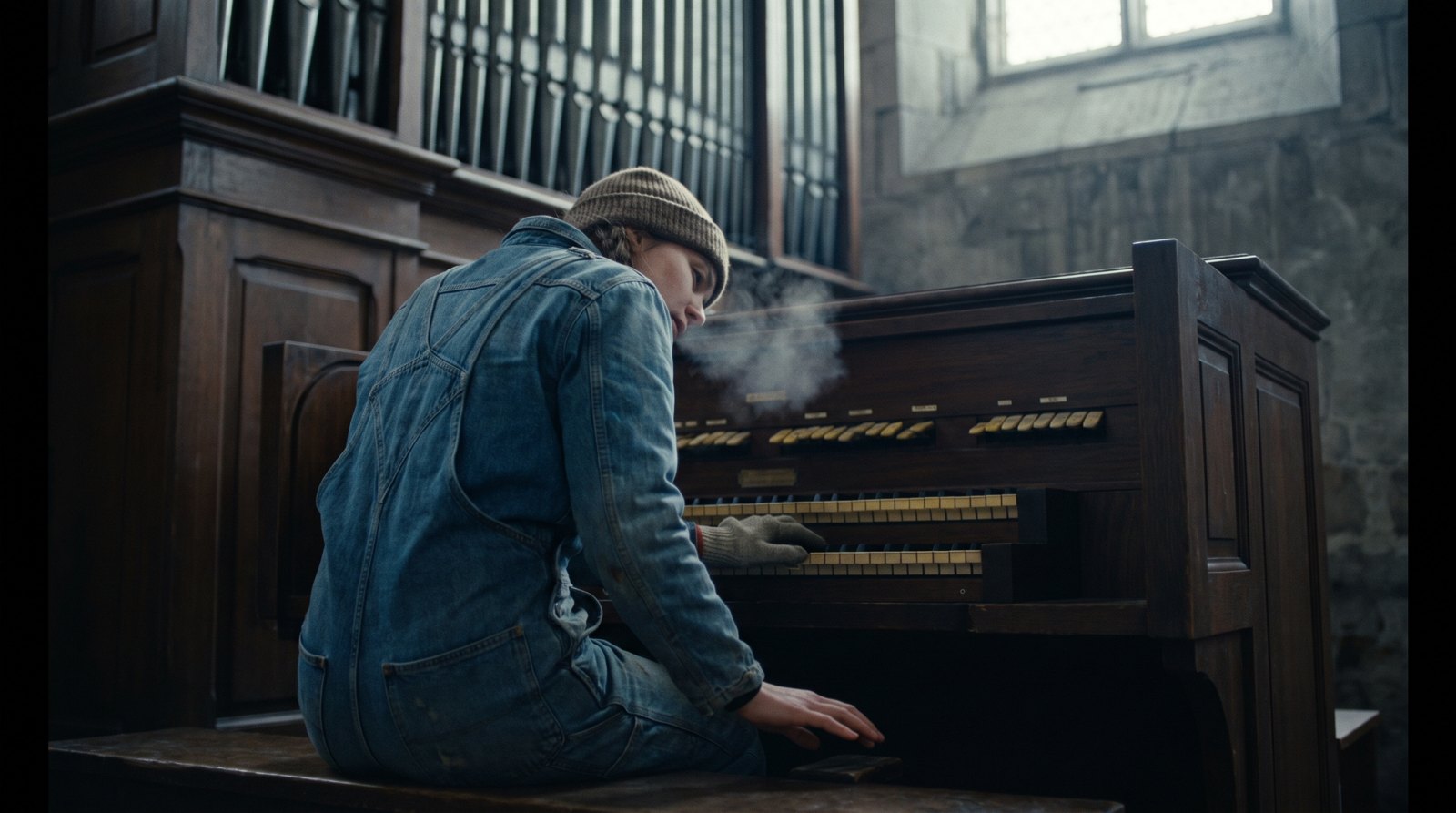
Wenna Pryce was flat on her back under the organ bench, torch clamped in her teeth, when the whole church exhaled.
She felt it before she heard anything: a pressure behind her breastbone, like the start of a cough that never arrived. The torch beam shook on the underside of the console. Somewhere above her, wood ticked as it cooled, though nothing in Nantglas Chapel had been warm since October.
"Sorry," she said, to no one, because her elbow had found a pedal note she hadn't meant to press.
She hadn't meant to press it because it wasn't on the schedule in her lap. Sixty-one stops, four manuals, a pedalboard she'd mapped twice since eight that morning, and this note sat between two she'd already tuned, unlabelled, unlisted, wired into the pedal action like an afterthought nobody had bothered to erase.
She was three hours into her first solo job — Tudur down with his chest, the Sunday service two days off, the pews half stripped for revarnishing — and she had promised him, out loud, that she wouldn't touch anything she couldn't account for.
She climbed out from under the bench to account for it.
The pipe sat at the back of the swell box, behind forty-one others, wood instead of the metal around it, no larger than her forearm. Too short to make a sound that low. She checked twice. It should have been physically incapable of the note her chest had just felt.
She wrote it down anyway — unlisted wood pipe, pedal, back rank, query — because Tudur had taught her that the first rule of the trade was that you wrote down what happened before you decided what it meant.
Nerys Pugh found her twenty minutes later, still crouched in the swell box with a torch and a frown, and set a mug of tea on the console lid without asking if she wanted one.
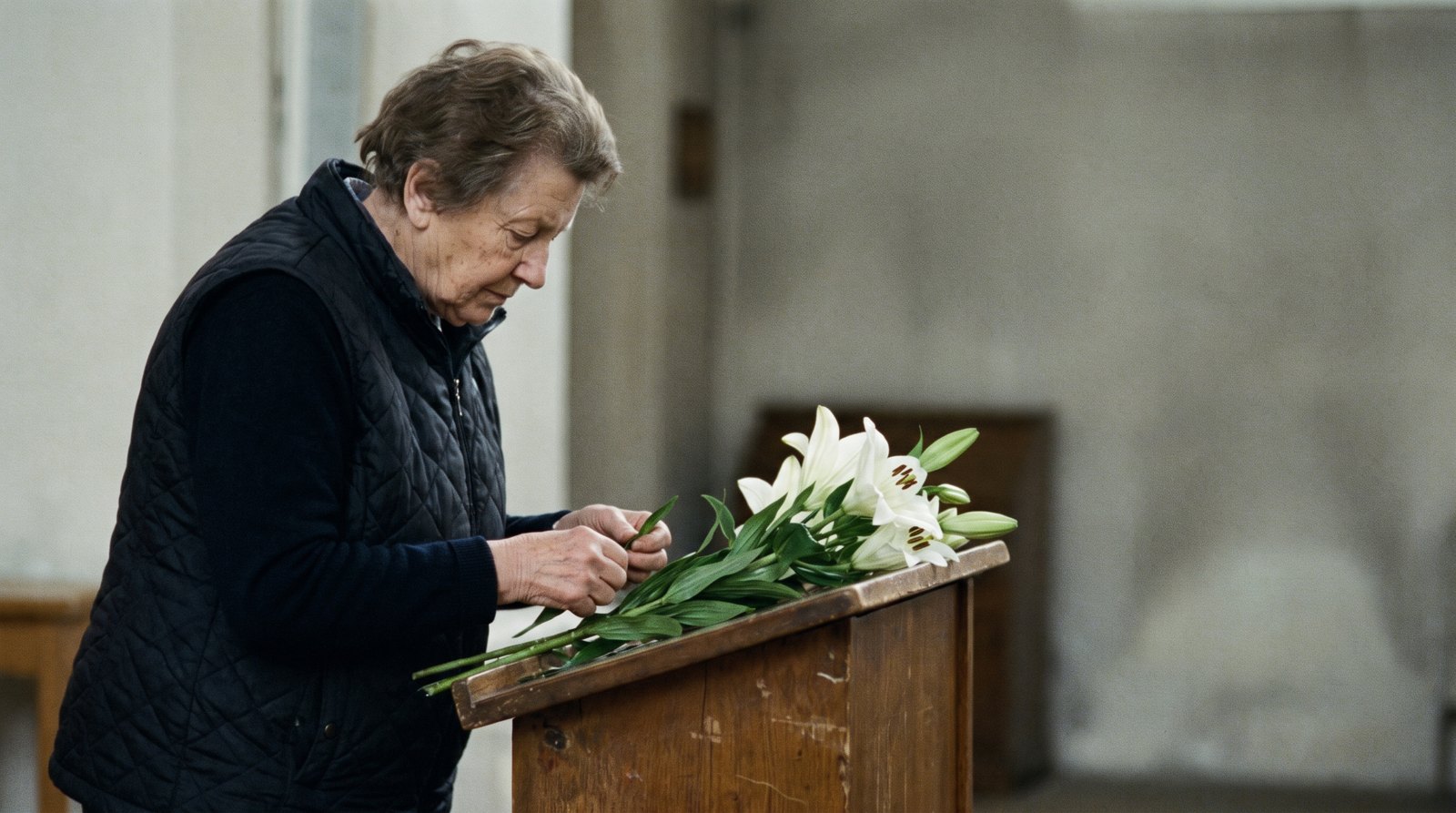
"You've gone the colour of the hymn boards," Nerys said. She'd been arranging lilies at the lectern since half past nine, and smelled of them, green and slightly funereal. "First time alone in an old building does that. Drink your tea."
"There's a pipe back here that isn't on my list."
"There's a lot back there that isn't on anybody's list." Nerys didn't look up from the leaves she was stripping. "Sixty years I've dusted this place. You stop asking after a while."
"Doesn't that bother you?"
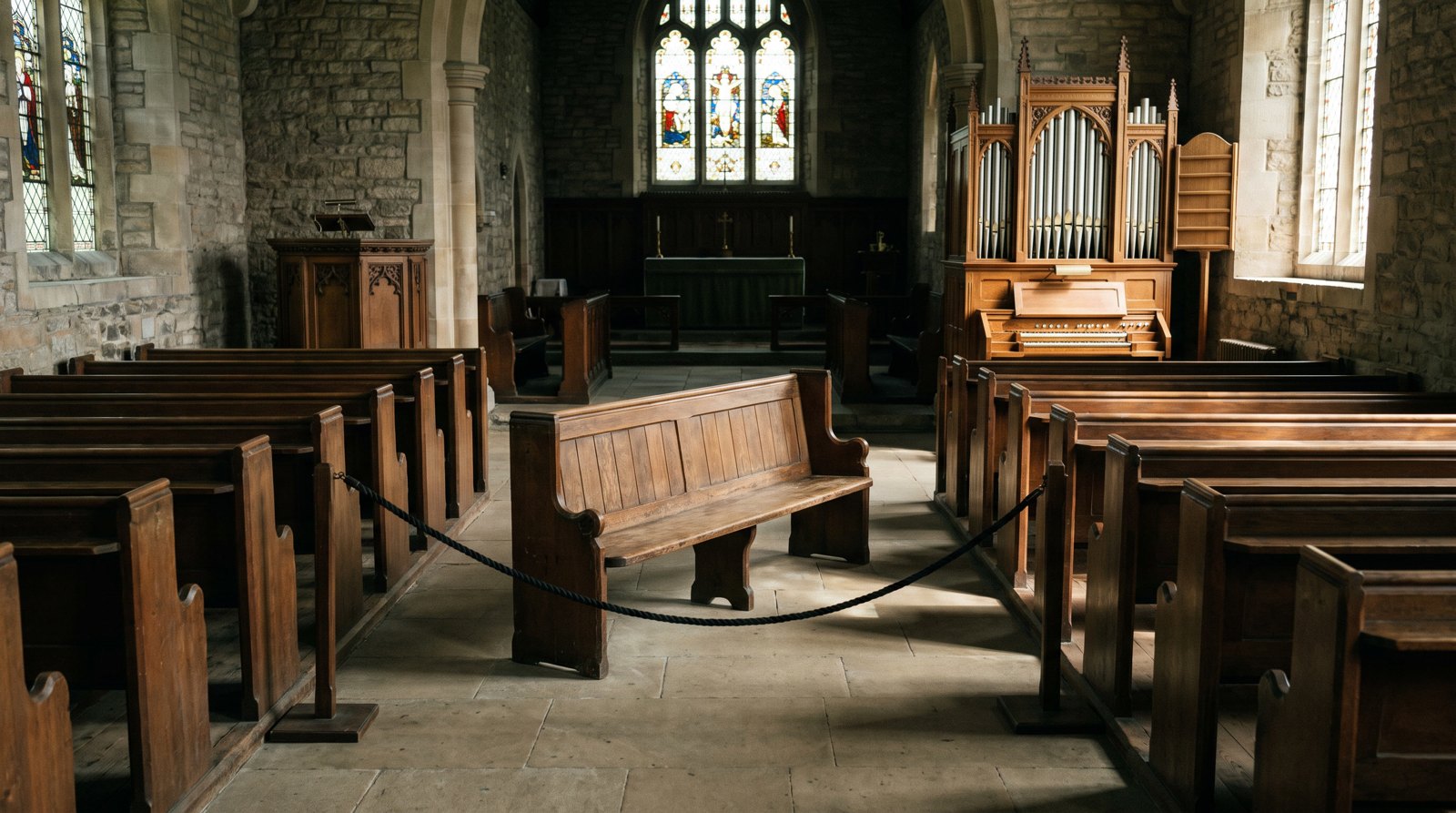
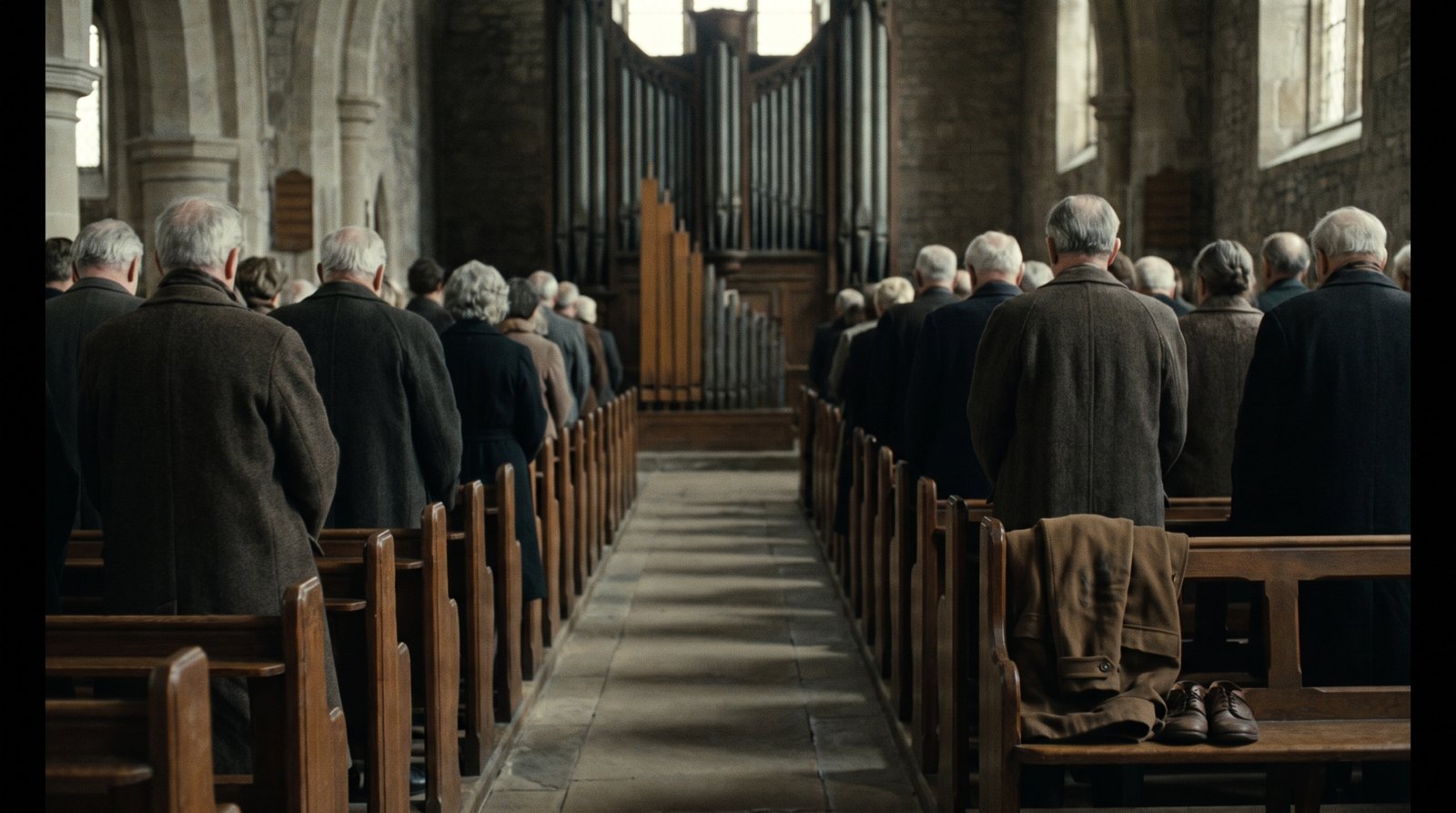
"What bothers me," Nerys said, "is these lilies, and the fact you've had one hand in that box for twenty minutes without blinking." She nodded at the third pew from the front, left side, its varnish half stripped to bare oak. "That's my pew, by the way, once they've finished it. Forty years I've sat there. Drink your tea before it's cold, love."
Wenna drank her tea. She did not mention that the note she'd found, when she'd finally coaxed a number out of it with the pressure gauge, corresponded almost exactly to the resonant length of that exact pew, counted in feet from the console.
She rang Tudur that evening from the vestry, coat still on, breath fogging in a room the boiler never quite reached.
"Wood pipe," she said. "Back rank, pedal division. No stop knob, no label."
"And?"
"It sounded when I hit F below the stave. I didn't hear it. I felt it."
There was a long pause on the line, the kind Tudur usually filled with a joke.
"Don't play that note again," he said instead.
"I need to know what it's for before Sunday."
"You need to leave it exactly where you found it." His chest whistled when he breathed, worse than she remembered from Friday. "My teacher showed me that pipe when I was your age."
"Showed you what it does?"
"Told me what it's for. Told me it's not our job to ask why. Only to keep it pointed where it's least trouble."
"Pointed at what?"
"At who," he said. "It tunes itself to a pew, slow, over years. The wood settles, the note creeps sharper, till it's sitting on somebody's chest instead of empty air."
"So you nudge it back?"
"Every spring. An eighth of a semitone, just enough to walk it off whoever it's found." A breath, wet at the edges. "Kept it three pews shy of anyone for thirty years. I kept it there another twenty."
"And if you don't nudge it?"
"Then it finds someone," Tudur said, "and it stays found until they move, or it does."
"What happens if they move?"
He didn't answer that one directly, and she had learned enough about him in eight months to know that meant he'd answer everything except that.
"Where's it pointed now," she said instead, "if you haven't touched it since March?"
The silence on the line went on long enough that she heard his chest again, and under it, faint, the sound of him doing sums he didn't want to finish out loud.
"Third pew," he said. "Left side. I was going to walk it back next week."
She looked through the vestry door at the third pew, its bare oak pale in the streetlight, the varnish men due back Thursday to finish what they'd started. Nerys's pew. Nerys, who had sat in it every Sunday for forty years and had just spent twenty minutes telling Wenna not to be afraid of an old building.
"Tudur, the revarnishing. They've moved half the pews forward a foot for the sanding. Does the tuning still hold if the pew's not exactly where it was?"
The whistle in his breath caught, and this time it wasn't the boiler.
"No," he said. "It doesn't."
Evensong rehearsal was in ninety minutes. Nerys had said, twice, that she'd sit in her usual place tonight whatever state the varnish was in, because forty years was forty years and a dust sheet wasn't going to move her.
Wenna went back into the swell box with the tuning cone and a torch held in her teeth again, hands too fast for the care the job wanted. She found the pipe exactly as cold and exactly as ordinary as before. Wood, a hand's width, no different from its neighbours to look at.
She measured the pew's new distance from the console, worked the figure Tudur had given her, and turned the cone a careful eighth-turn flat, the way she'd been taught to nudge any pipe that was creeping sharp.
Her chest didn't ease. If anything the pressure climbed, one long low note under her ribs that had nothing to do with sound.
She turned it again. Nothing changed in the room. Everything changed in her body: the specific, personal, unmistakable feeling of being sat next to.
She stopped turning the cone and did the sum properly this time, the one she should have done first — not the pew's distance from the console, but her own, crouched exactly where she was, exactly the width of one small wooden pipe away from the note that made it.
Nerys found her a minute later, still kneeling in the swell box, holding perfectly, deliberately still.
"You're meant to be tuning," Nerys said, "not praying."
"Don't move that pew back tonight," Wenna said. "Leave it exactly where the varnish men left it. Promise me."
Nerys looked at her for a long moment, the kind of look that had outlived several vicars and required no torch to see by, and said she supposed she could manage one Sunday in a folding chair.
Wenna finished the eighth-turn with hands that had finally stopped shaking, walking the note three careful pews further off than Tudur's own numbers called for, because his margin had only ever been built for a man who wasn't kneeling directly inside the swell box when he did the walking.
The pressure lifted off her chest in one long breath, the same exhale the whole church had made that morning, run backwards.
She locked the case at nine, wrote pedal pipe, adjusted, hold at current setting in the schedule, and did not write what the setting was measured from.
It was gone eleven before she thought to check her own coat, hung all evening on the vestry peg nearest the console, three feet and no more from the pipe she'd spent the day tuning away from Nerys.
Someone, a long time before her, had chalked a small mark on the underside of that peg. Not Nerys's initials. Not the vicar's.
Two letters, faded almost to nothing, in a hand old enough that the chalk had gone the colour of the wood itself.
W.P.