Inherited Frequency
A shortwave hobbyist inherits her dead father's radio and finds a numbers station he logged only on the days that mattered most to her.
Read by a full cast: your narrator tells the story, every character speaks in their own voice. About 7 minutes.
Narrators are synthetic voices designed for Flinchd or licensed from our speech provider, with invented names. None imitates a real person. Characters are cast automatically, so the person speaking is never the person narrating. A score matched to the genre plays underneath; turn it up or off in the player.
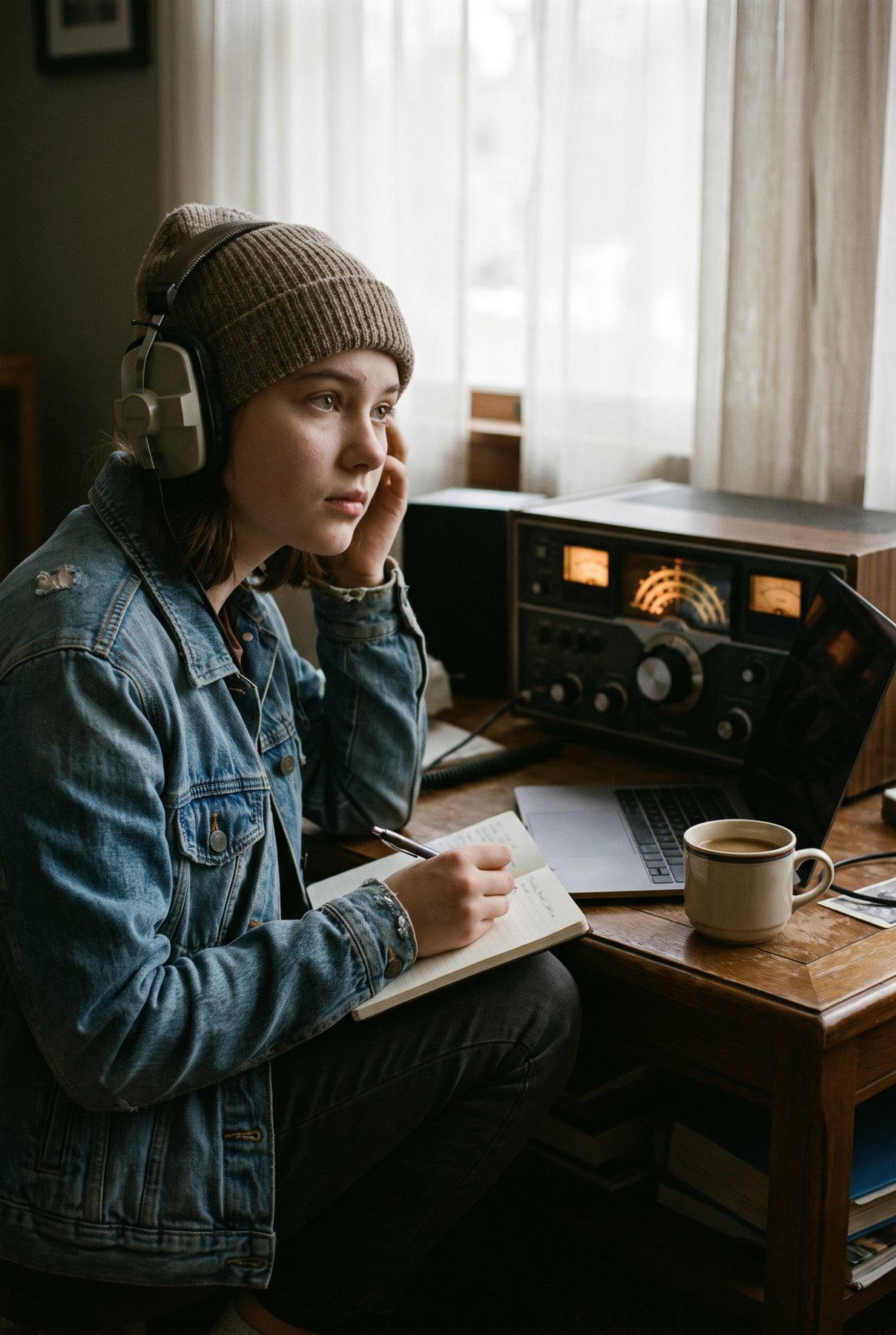
Carys Cade was elbow-deep in her dead father's radio cabinet at eleven at night when the relay clicked three times and found a frequency that shouldn't exist.
She knew the sound of every scheduled broadcast on this rig: the weather faxes, the aviation chatter, the two Cold War ghosts everyone in the Commons had mapped and named years ago.
This wasn't any of them. A woman's voice, flat and metallic, reading numbers in blocks of five.
Carys sat back on her heels, cold coffee forgotten, and did what her father had taught her before he taught her to ride a bike: she wrote down the exact minute. Twenty-three fourteen. Not the top of the hour. Nobody who mattered rounded.
Her father, Tomos, had run this receiver for eleven years, feeding it into a worldwide web of strangers called the Commons — anyone could tune a GPS-synced shortwave dish for free, so long as they logged honestly what they heard.
He'd done it under the handle GULL-9, alongside his real job keeping the harbour authority's radios alive: the buoys, the fog signal, the little emergency channel nobody used until the one night everybody did.
He'd died in March, heart, no warning. Carys kept the antenna running out of habit now, the way you keep watering a plant that isn't yours to kill.
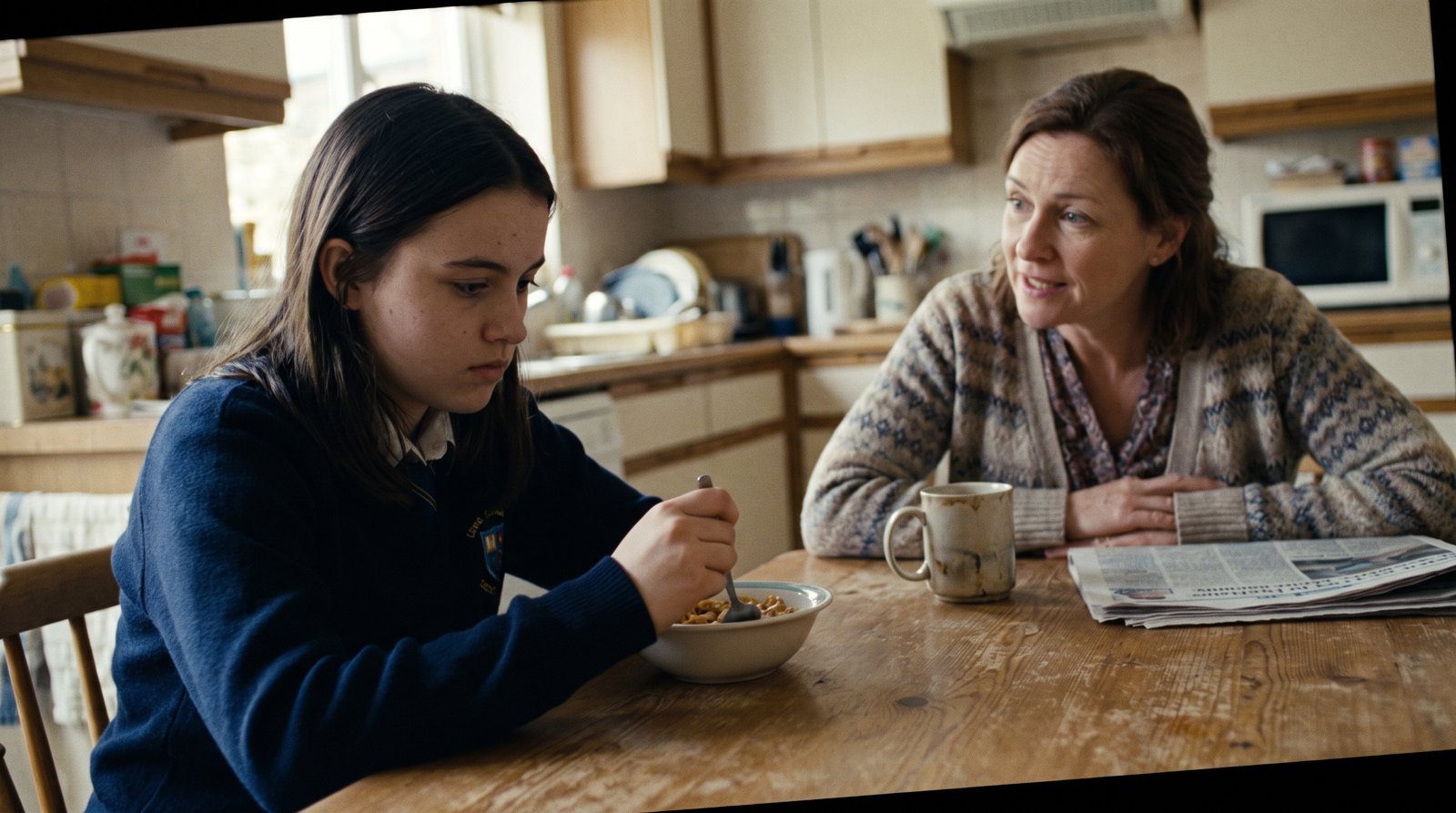
Her aunt Delyth, who had moved in to fill the house's empty half, thought the hobby was healthy grieving and said so at breakfast at least once a week, the way you'd praise a child for eating vegetables.
She didn't know Carys had failed a maths test that morning because she'd been up until four logging a transatlantic aviation beacon. Carys hadn't told her. Some numbers were nobody else's business yet.
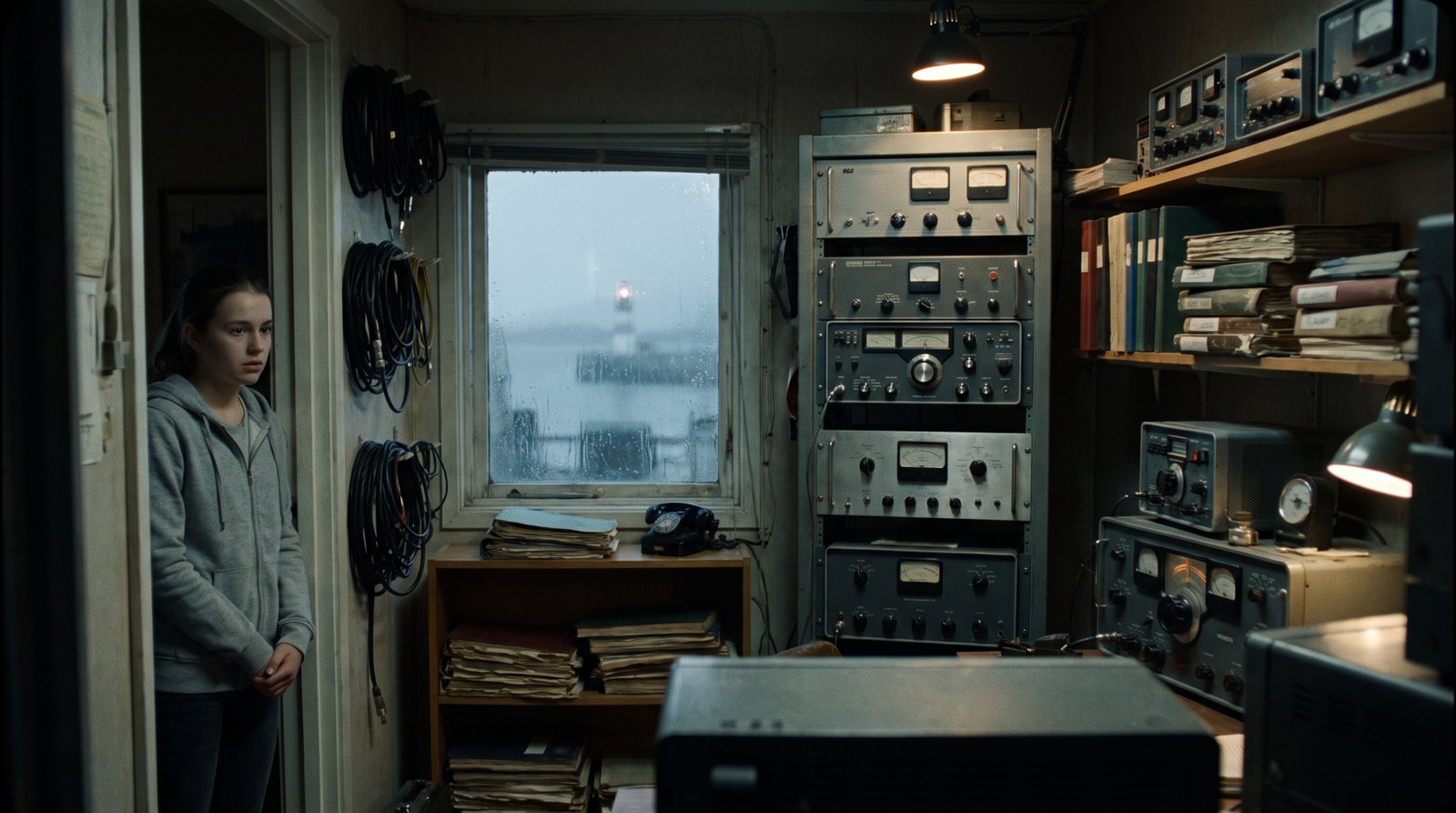
She almost closed the laptop. Numbers stations were the Commons' oldest joke. Everyone had a favourite: the woman who read in Czech and only ever on Tuesdays, the one that opened every broadcast with four bars of a tune nobody could place.
Nobody could prove what any of them meant, because they ran on one-time pads, ciphers unbreakable by design unless you held the matching pad yourself. You could find a station. You could never read it.
She sat very still and let the numbers keep coming until the transmission cut at 23:41 exactly, and the mast outside her window ticked once as it cooled.
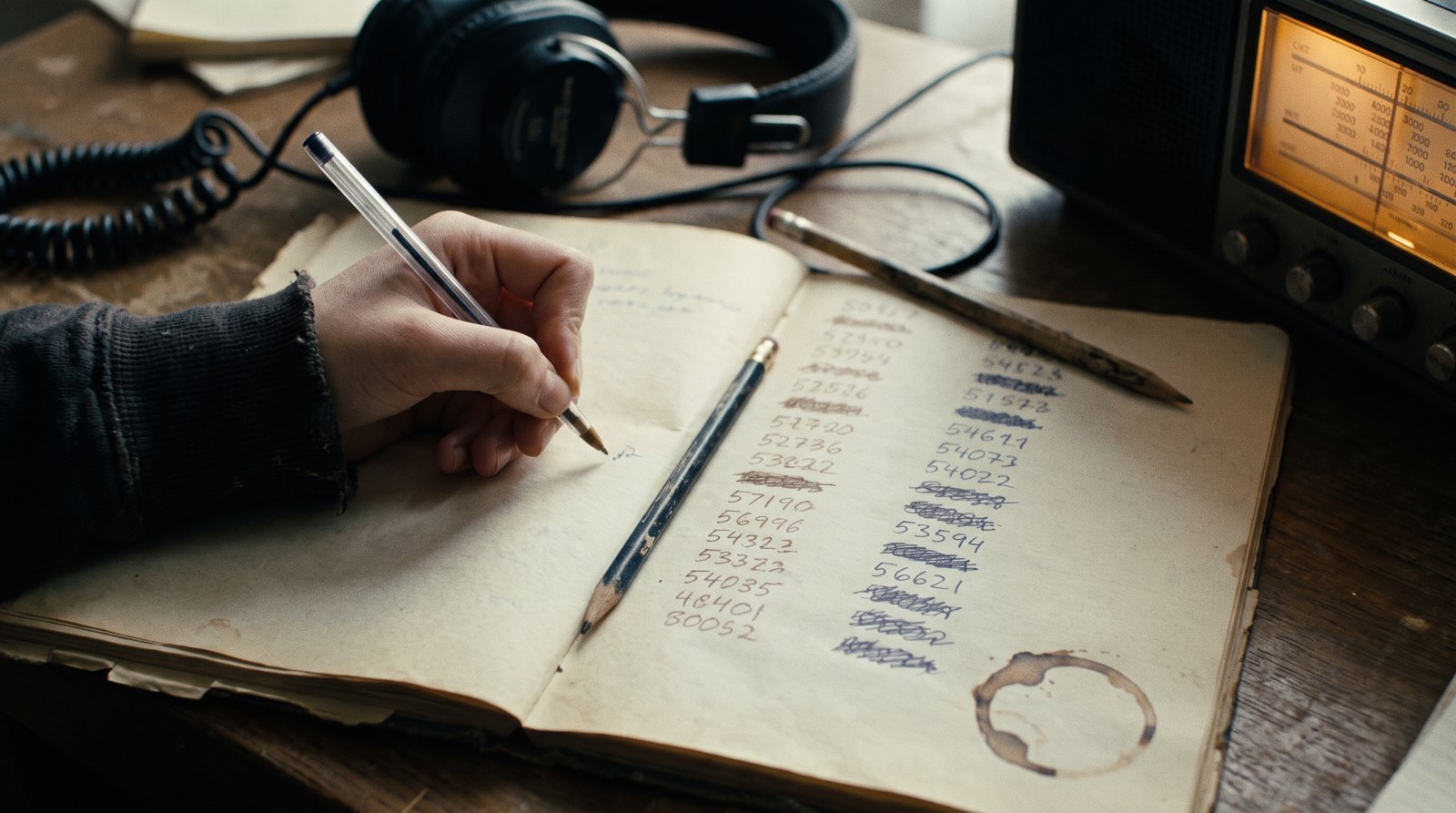
She didn't sleep. By six she'd pulled her father's private notebook from the drawer under the transceiver, the one he never uploaded, and found that same frequency logged there too, dated, going back eleven years.
Every date lined up with something. The seventh of June, every single year without fail. The day she'd broken her arm on the harbour wall. The morning of her first day at secondary school.
The seventh of June was her birthday.
He'd been listening to this station, on these exact days, since before she was old enough to remember losing a tooth.
She messaged the one person in the Commons who wouldn't tell her she was imagining things.
Found something. Need three stations to fix it. Can't do it alone.
TIDE-CLOCK was a retired air-traffic controller in Accra named Priya Osei, who'd been trading logs with GULL-9 since before Carys had a login of her own. She signed off every message with the UTC time instead of a goodbye, as though farewells needed timestamping too.
Rule one, she wrote back. A fix isn't a fix until three stations agree. Rule two, which nobody bothered to write down: don't want an answer badly enough that two starts looking like three.
I know the rule, Priya.
Then you know why I'm asking twice.
They ran it properly anyway: time-difference-of-arrival math across three Commons nodes an ocean apart, comparing the exact instant the signal reached each dish, narrowing a circle on the map night after night.
Until the circle was the size of a town, then a street.
Then the size of a house.
Her house.
"You're not allowed to be excited," Priya typed, when Carys sent the coordinates back a second time to be sure. "Excited people round their numbers."
"I'm not excited," Carys typed. "I've had four coffees and I can see my own roof on the map."
She went up to the loft that night with a torch, dust catching gold in the beam. The transmitter was behind the water tank, small and warm under her palm.
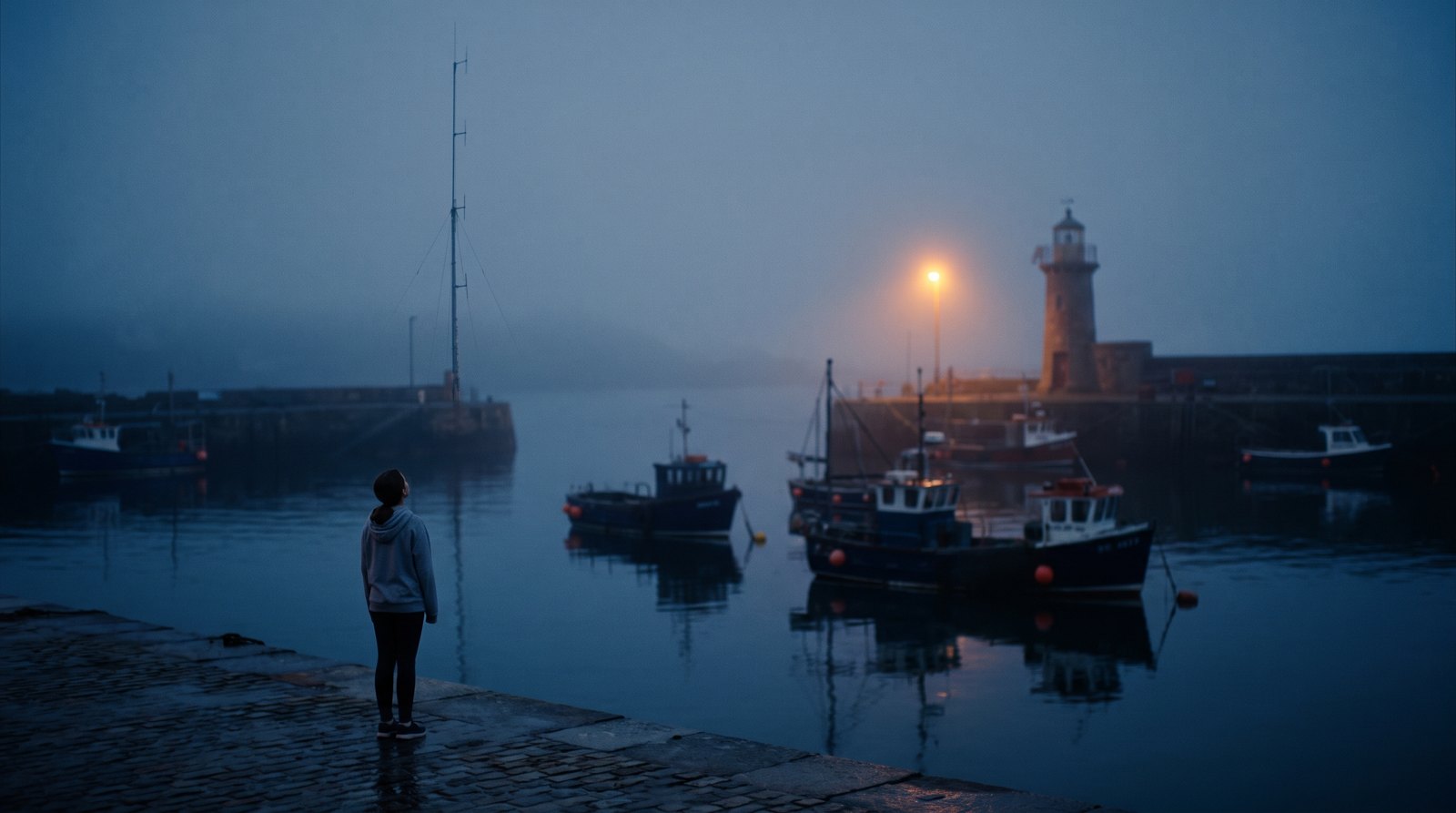
It was wired straight to the lighthouse mast her father had strung a hundred feet of copper wire to the year she was born.
It smelled the way the radio cabinet always had, hot valve and old solder, a smell she'd have known blindfolded. He hadn't found a numbers station.
He'd built one.
The one-time pad was in the same drawer as the notebook: forty pages of letter groups worked out in pencil, one page a week, never a key repeated. It took three nights to match the first broadcast to its page.
When she finally decoded it, it wasn't a code at all, not really. It was a diary entry, dated the day she'd broken her arm falling off the harbour wall.
He described, in a stranger's flat robot voice, five numbers at a time, exactly how proud he'd been that she hadn't cried until the doctor arrived.
There was another for her first day of secondary school, admitting he'd sat in the car park an hour after the bell in case she needed collecting early, and hadn't told her that either.
Another, three years old, was only four words once she'd worked the pad through it: she is doing fine. Nothing else that night, sent into the listening dark for no one in particular to hear.
He hadn't known yet that someone would.
He'd been telling the whole listening world how he felt about her, in a code only he held the key to, for eleven years.
The voice reading it back to her was a machine's, chosen years ago for how little it gave away — flat, evenly spaced, no warmth in it at all, because a warm voice on a numbers station would have drawn the wrong kind of listener.
Carys found one voicemail of her father's still saved on her old phone and played it after, just to put the real sound of him back over the words. It didn't fit at first, his low unhurried burr trying to wear a stranger's careful cadence.
Somewhere in the second sentence, it did.
She decoded forward through the pages like reading letters that hadn't been sent yet, because in a way they hadn't. The last dozen were keyed to a date still to come: her eighteenth birthday.
Instructions, plain as anything once you had the pad — a solicitor's name, a box number at the post office — and one line that wasn't practical at all.
Tell her the wire's still good long after I'm not, if she ever needs to hear from me and doesn't know how.
Carys read that line four times, then went and made more coffee, because crying felt like it would take longer than she had.
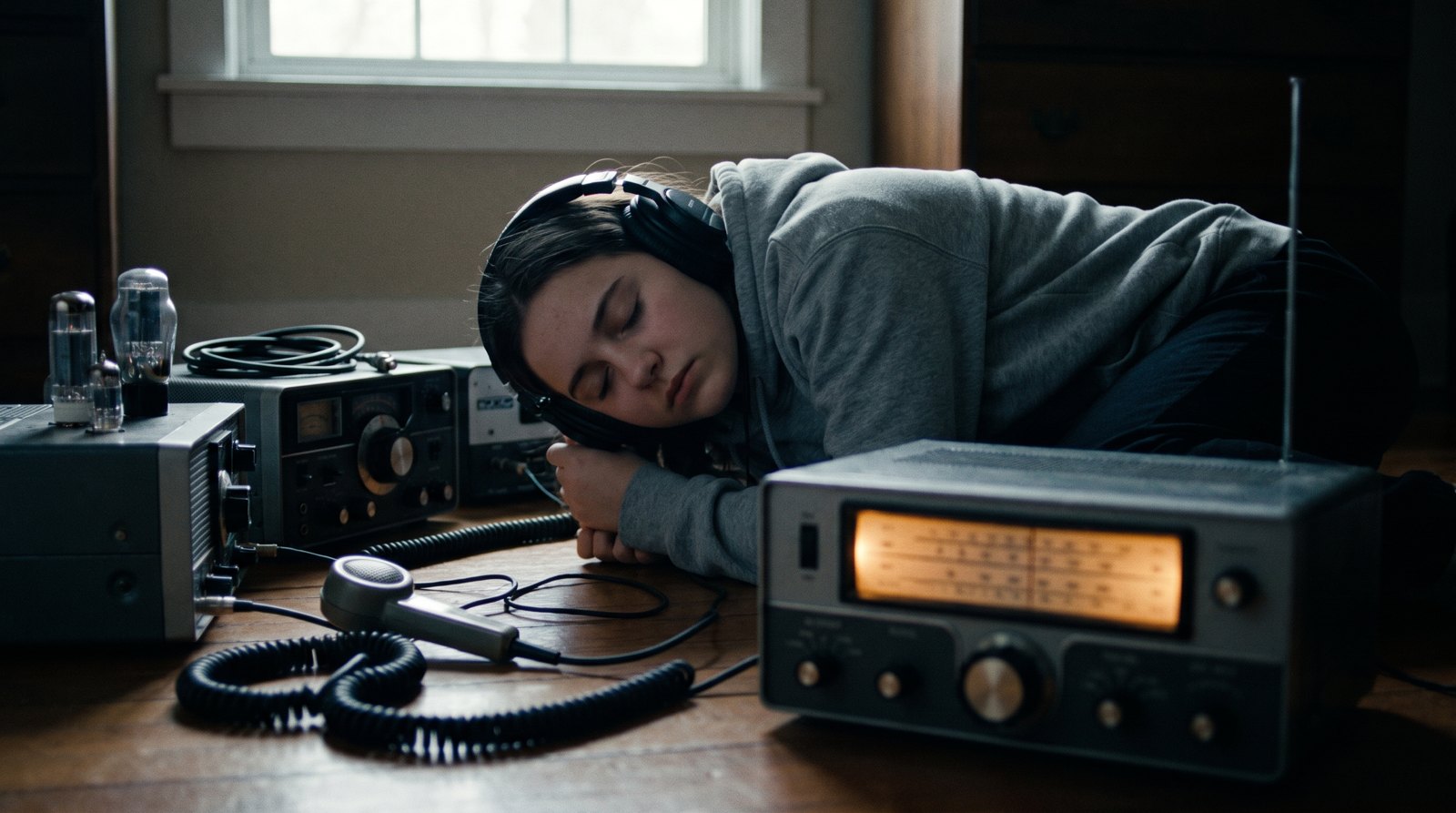
She told Priya everything, because the Commons rule about honest logging didn't stop mattering just because the news had turned personal.
Together they filed the station as solved — claimed, the polite word the Commons used, so nobody went hunting a stranger's grief for sport.
It was Priya who noticed the neighbour.
The archive tool that retired a claimed frequency flagged one more, unclaimed, half a mile down the coast road: same five-number cadence, same patient once-a-week key changes.
It was transmitting from a house two doors down from a boy in Carys's year whose father had also died that spring. A boy she'd nodded at in the corridor and never once spoken to.
Grief made people strangers to each other right when they had the least reason to be.
Carys stared at the little red pin on the map for a long time before she moved. Her father had never once mentioned another builder.
Maybe he hadn't known either — maybe nobody in the Commons had, all these quiet stations mistaken for spies, filed and forgotten under unexplained, while ordinary fathers kept talking to children who hadn't learned yet how to listen.
Rule one, Priya wrote. A fix isn't a fix until three stations agree.
I know the rule, Carys typed back, already reaching for her coat. I just didn't know there'd be two of us.